
Map of Sherburn fields showing ancient farming strips and list of the strip owners prior to enclosure

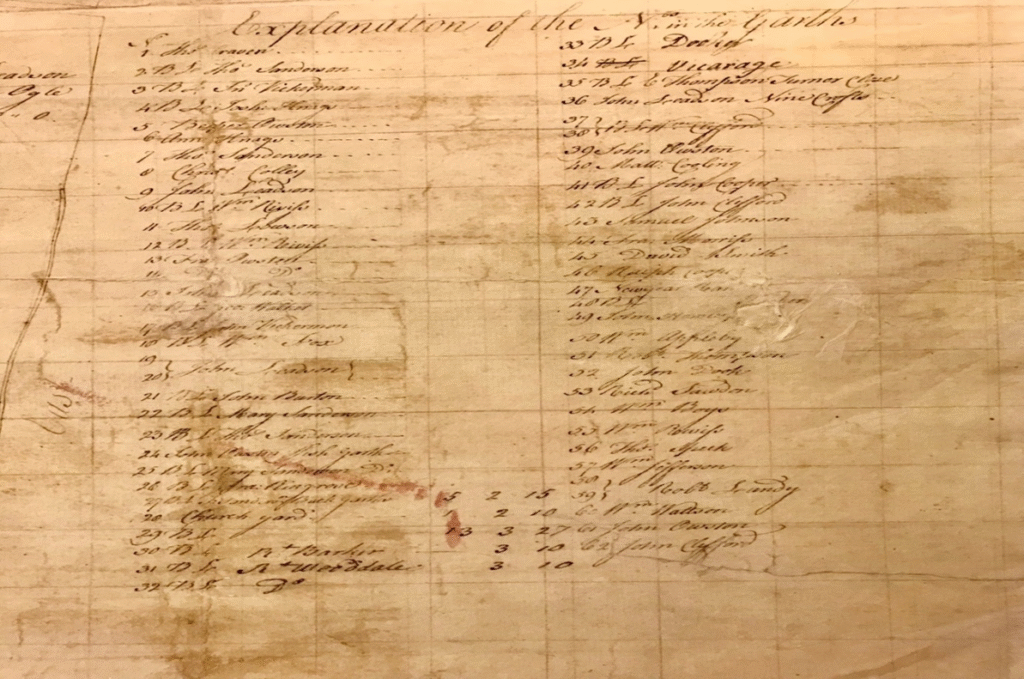
Farming strips in open fields should be 10 times as long as it was broad and its dimensions should be 22 yards or 1 chain wide and 220 yards long 1 Furlong, producing an area of 1 acre or 160 sq perch’s, rods or poles.
The shape was determined by the convenience of ploughing a furrow as long as possible before turning back, hence the word ‘furlong’
The area was determined by the amount of land that could ploughed by a man and his team (Oxen or Horses) in one day.
Very few strips actually conformed to this in actual size, the key factor which determined the amount of land that could be ploughed in one day was the local conditions such as terrain and soil quality. Heavy clay might compel the strip to be smaller and well drained sandy soil would allow the strip to be larger
¨Example Sherburn low land very heavy peaty, village land light and sandy, the Wolds very stony and chalky Which would clearly effect the area which could be ploughed in a day
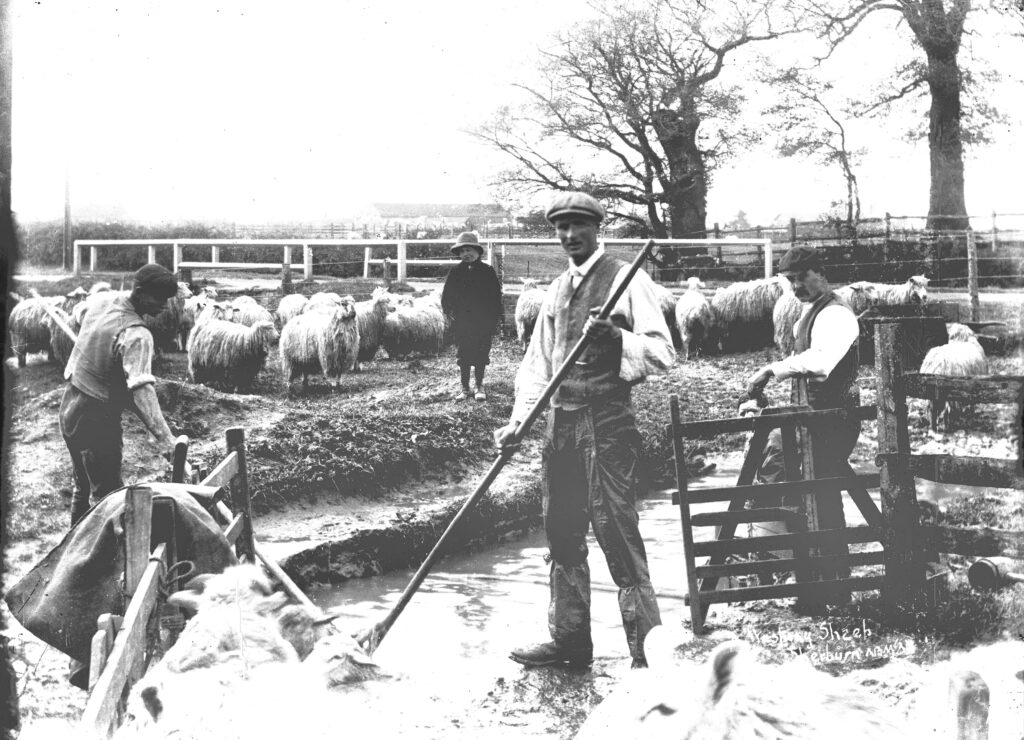
Farmers and Shepperd’s dipping sheep in a purpose built tank next to the east beck, known locally as the “wash dyke”
